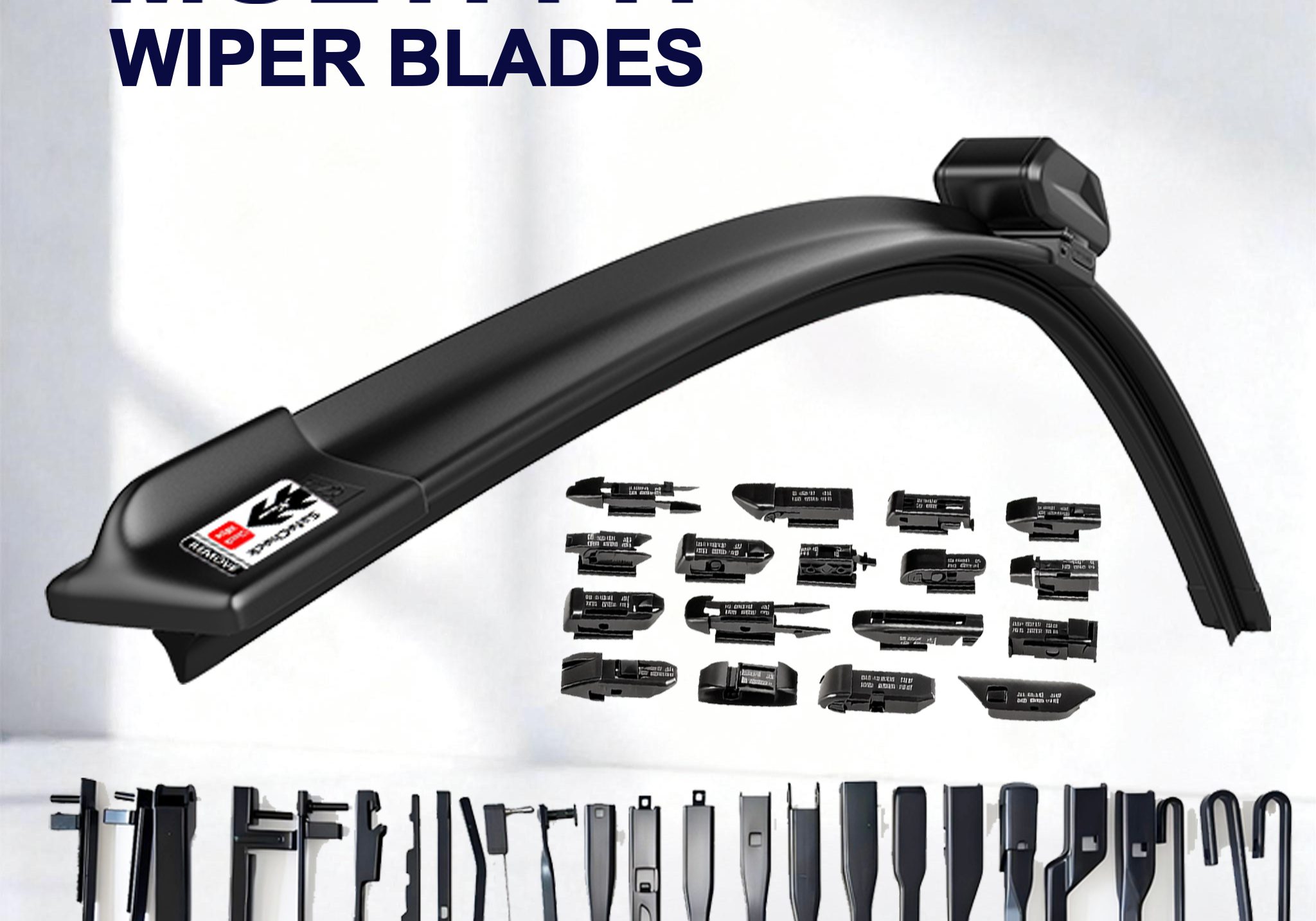
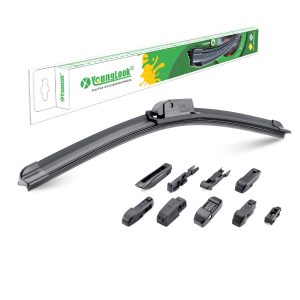
Choosing between frameless wiper blades and framed wiper blades is not simply a question of which design looks more modern. For automotive distributors, importers, wholesalers, and private-label brands, the better purchasing decision depends on vehicle compatibility, windshield geometry, rubber quality, pressure distribution, adapter design, climate, target price, and manufacturing consistency.
Frameless wipers, also called beam or flat wiper blades, have become increasingly common on newer vehicles. Traditional framed or conventional wipers, however, remain an important aftermarket solution for many vehicle applications and price-sensitive markets.
So, which is better: frameless wiper balde or frame wiper blade?
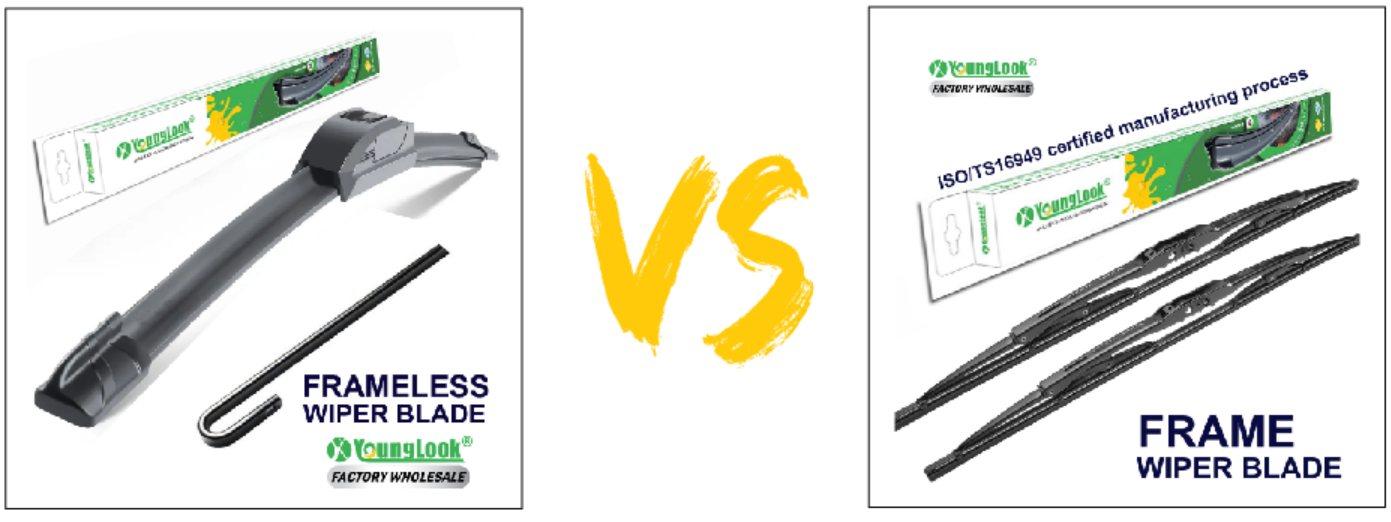
The practical answer is: neither design is universally better. The right wiper is the one that delivers the required wiping performance, fitment, durability, and cost for the intended vehicle and market.
For B2B buyers, the most important question is therefore not just “Which type should I buy?”
but:
“Which wiper blade specification can my supplier manufacture consistently at the quality, volume, and price my market requires?”
This guide compares frameless and framed wiper blades, explains how they perform in real conditions, and provides a practical purchasing checklist for distributors and automotive aftermarket buyers.
The Importance of Wiper Blades
Wiper blades directly affect windshield visibility
Windshield wipers are a relatively small automotive component, but they perform an important visibility function in rain, snow, dirt, and other conditions.
The Society of Automotive Engineers (SAE) maintains SAE J903, a recommended practice covering ground-vehicle windshield wiper systems. The current J903 revision was updated in October 2024 and establishes minimum performance considerations and test procedures for passenger cars, light trucks, and multipurpose vehicles up to 4,500 kg GVW.
This is an important point for B2B buyers: wiping performance is not simply an aesthetic feature. It can be evaluated through defined engineering and testing procedures.
Wiper performance depends on the complete system
A wiper blade does not work independently.
Its performance is influenced by:
- Wiper-arm spring force
- Windshield curvature
- Blade length
- Pressure distribution
- Rubber material
- Rubber profile
- Blade structure
- Adapter design
- Surface contamination
- Environmental conditions
AAA specifically notes that wiping performance depends on windshield slope and area, spring tension, pressure points or claws, and the material used in the blade.
This is why simply comparing a “frameless” blade with a “framed” blade based on appearance can produce misleading conclusions.
Rain-X provides a similar guideline, stating that its wiper blades typically last 6–12 months, although there is no universal fixed expiration date.
For distributors, this creates an important commercial characteristic:
Wiper blades are not only an automotive component; they are a recurring aftermarket maintenance product.
What Are Frame Wiper Blades?
Conventional wiper blade construction
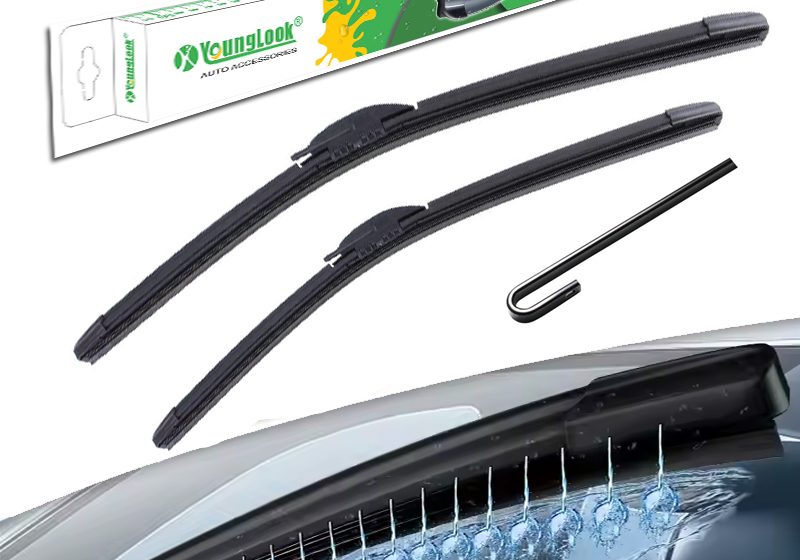
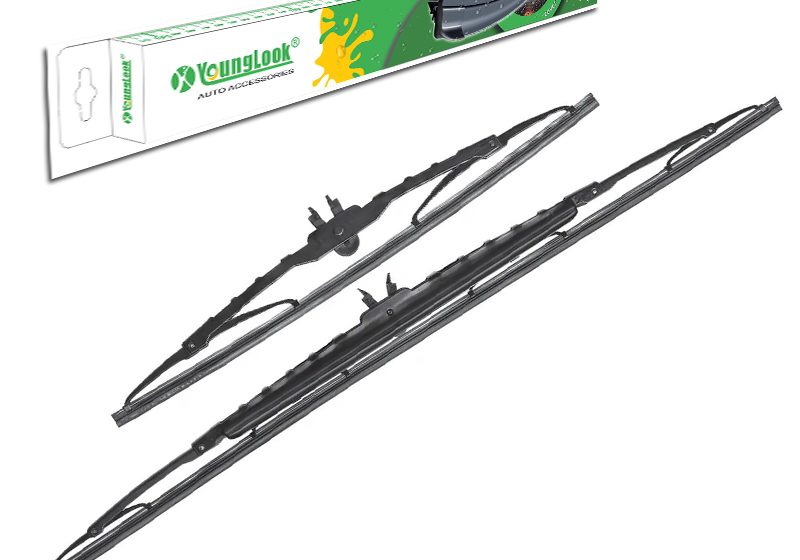
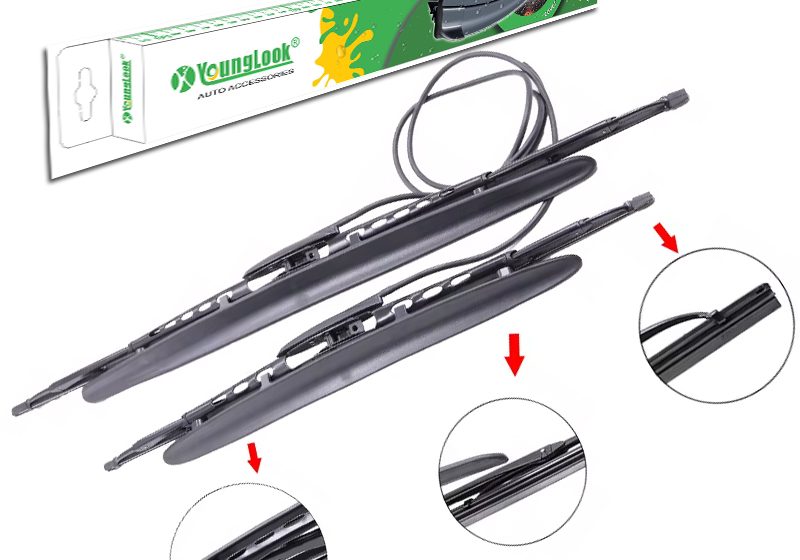
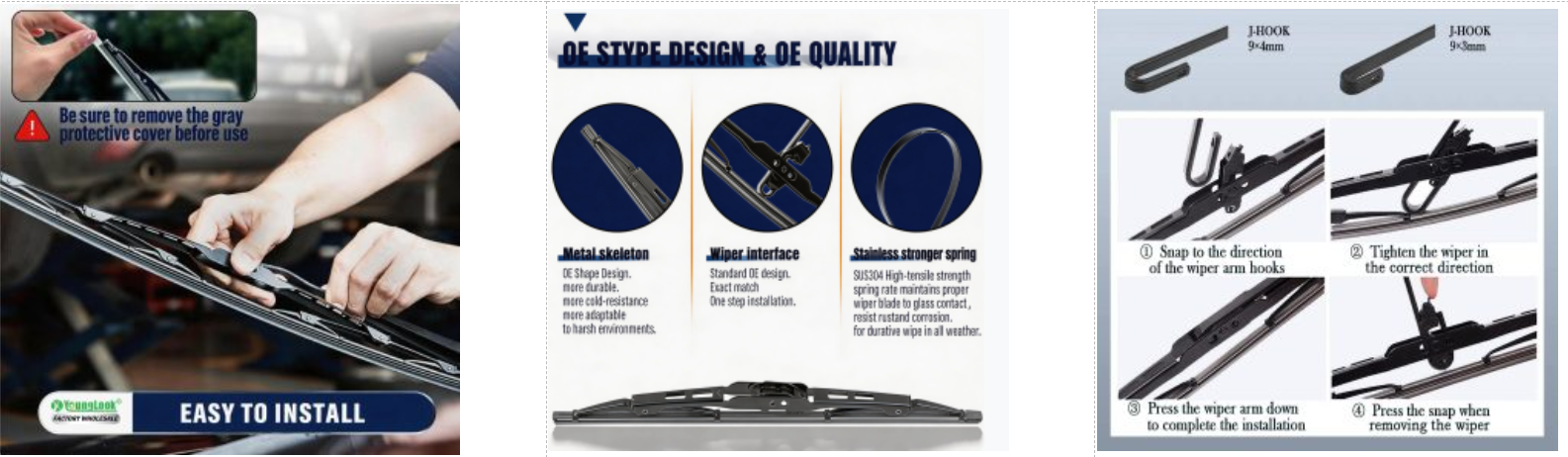
Framed wiper blades are commonly called conventional wiper blades.
They use a visible frame structure with multiple pressure points that holds the rubber wiping element against the windshield.
A conventional wiper blade generally includes:
- Metal frame
- Hinges or joints
- Claws or holders
- Rubber wiping element
- Connector or adapter
The frame transfers pressure from the wiper arm to different points along the rubber element.
Why conventional wipers remain important
Structure and quality are not the same thing.
A well-designed conventional blade with good rubber, accurate frame geometry, and consistent pressure can outperform a poorly engineered beam blade.
When framed wipers make commercial sense
For distributors, conventional blades can be particularly useful for:
- Older vehicle applications
- Value aftermarket programs
- Price-sensitive markets
- Traditional vehicle platforms
- Commercial fleets
- Customers looking for economical replacement options
A distributor serving a broad vehicle population does not necessarily need to eliminate conventional blades simply because beam technology is increasingly popular.
What Are Frameless Wiper Blades?
 Beam wiper construction
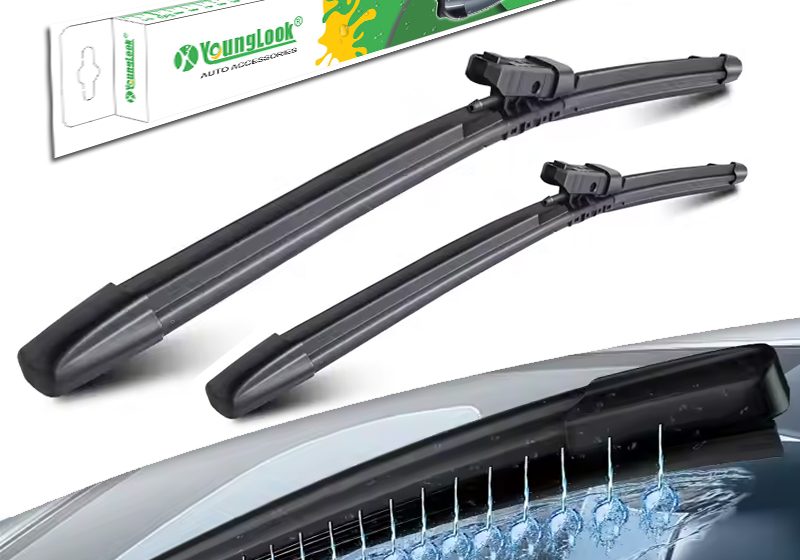
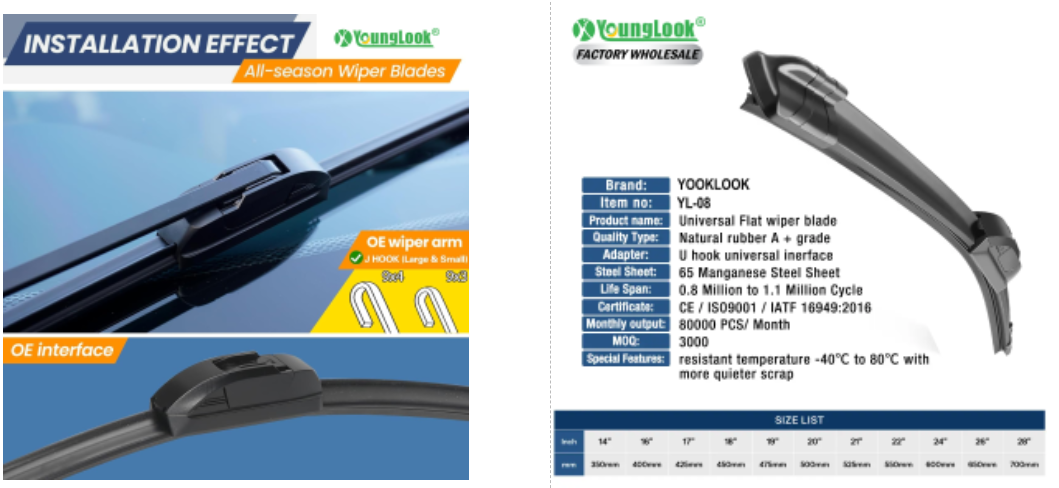
Frameless wipers are also commonly called:
- Beam wipers
- Flat wipers
- Bracketless wipers
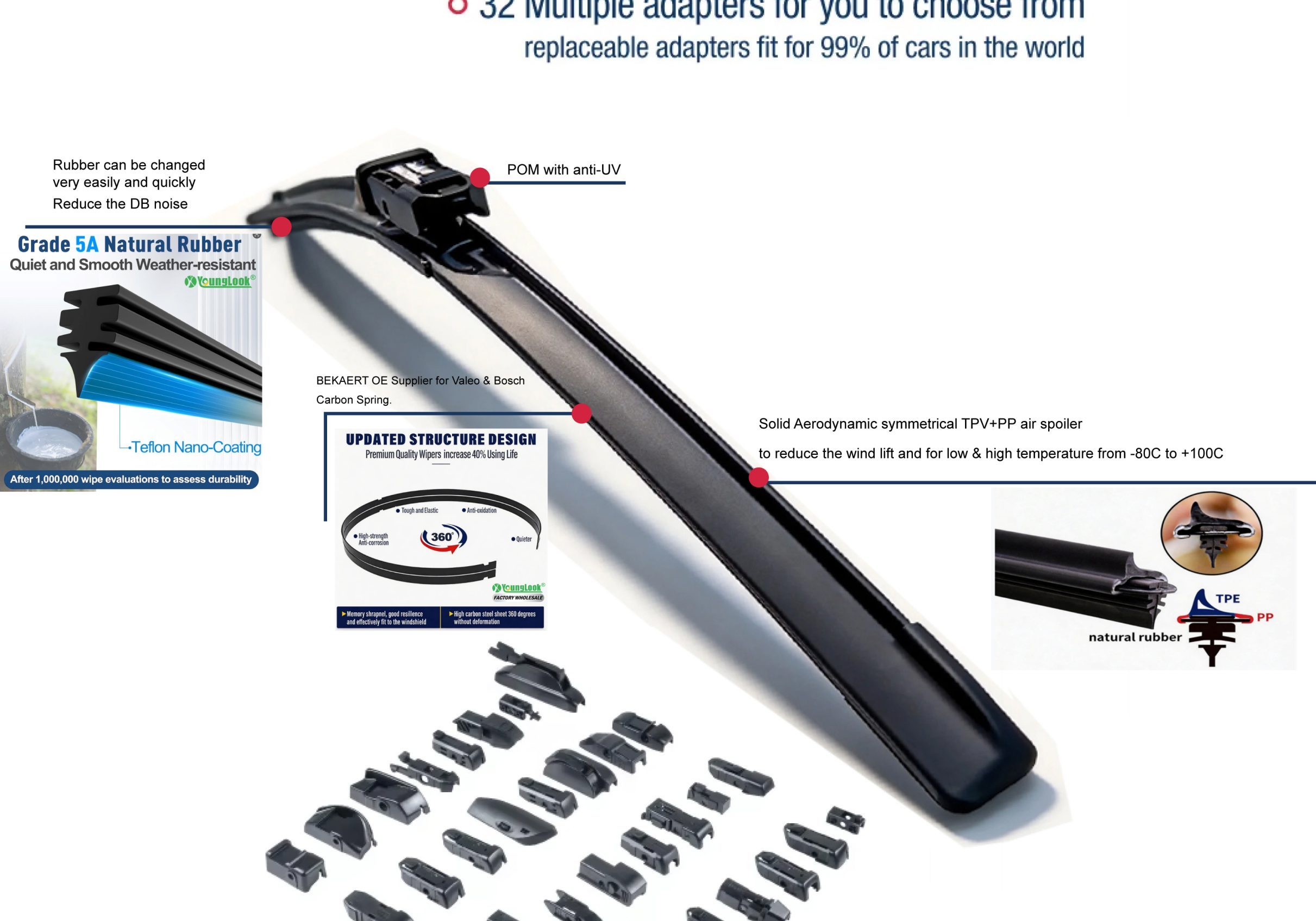
Instead of a traditional articulated metal frame, a beam blade normally uses a continuous flexible spring structure to maintain pressure against the windshield.
Bosch describes its beam technology as using a single beam design and tension-memory bending process rather than conventional joints, hinges, and brackets.
Why beam wipers are popular on newer vehicles?
Modern vehicles increasingly use low-profile exterior styling and curved windshield designs.
A properly engineered beam blade can provide:
- More continuous pressure distribution
- A low-profile appearance
- Reduced exposed mechanical components
- Strong aerodynamic potential
- Good conformity to curved glass
HELLA similarly describes flat-blade technology as using a continuous flexible metal carrier and integrated rubber lip, with aerodynamic design helping distribute pressure across the windshield.
Frameless does not mean universal
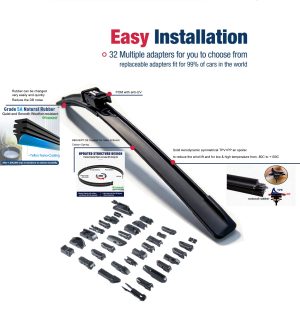
One of the most important purchasing mistakes is assuming that a beam blade is automatically universal.
Frameless Wipers vs. Framed Wipers: Key Differences
Construction
The basic structural difference is straightforward:
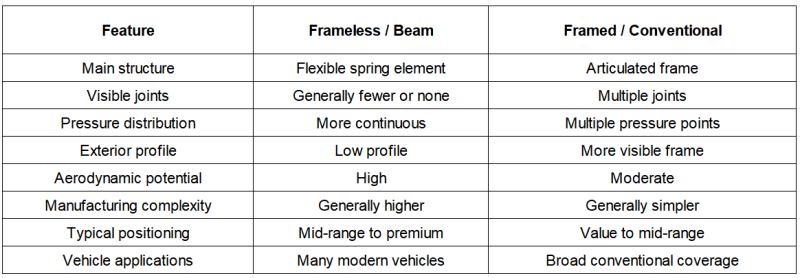
Windshield conformity
A beam blade can maintain a continuous curved profile and distribute pressure along the blade.
This can be particularly beneficial on windshields with complex curvature.
However, the result still depends on the spring characteristics and blade design.
A poorly engineered beam blade can still have:
Poor edge contact
- Chattering
- Streaking
- Uneven pressure
- Premature wear
- Aerodynamic performance
Beam wipers provide a strong platform for aerodynamic design because the blade body can incorporate an integrated spoiler or air-guiding profile.
HELLA describes its flat blades as using aerodynamic spoiler geometry and pressure distribution to improve wiping performance.
This does not mean that every beam blade automatically performs better at high speed.
Aerodynamic performance is a design characteristic, not simply a product category.
Snow and ice
Traditional frames contain multiple joints and exposed structural areas where snow and ice can accumulate.
Beam designs have fewer exposed mechanical components.
For winter markets, however, buyers should still evaluate the complete winter specification rather than assuming all beam blades are suitable for severe snow and ice.
AAA notes that severe weather can accelerate wiper deterioration and that winter-specific blades may use tougher rubber compounds for snow and ice conditions.
Which Performs Better in Real Conditions?
Light rain
In light rain, both framed and frameless blades can perform well if the rubber edge, blade geometry, and vehicle fitment are correct.
For a manufacturer, the rubber wiping edge is particularly important.
Factors include:
- Rubber compound
- Hardness
- Edge geometry
- Surface treatment
- Manufacturing consistency
Heavy rain
Heavy rain places greater demands on the blade’s ability to maintain continuous contact with the windshield.
A well-engineered beam blade can provide strong performance on many modern curved windshields because of its continuous spring structure.
However, a conventional blade designed specifically for the vehicle can also provide excellent wiping performance.
Highway driving
At higher speeds, aerodynamic design becomes more important.
Beam blades provide a natural platform for integrating spoilers and low-profile aerodynamic surfaces.
But buyers should not judge performance solely from the blade shape.
A proper evaluation should consider:
Blade geometry + spring characteristics + rubber + spoiler + adapter + windshield application.
Winter conditions
Winter applications should be evaluated separately.
Consider:
- Low-temperature rubber flexibility
- Ice resistance
- Snow accumulation
- Frame protection
- Corrosion resistance
- Spring performance
- Adapter durability
AAA identifies heat, snow, extreme weather, and environmental exposure as factors that can shorten wiper service life.
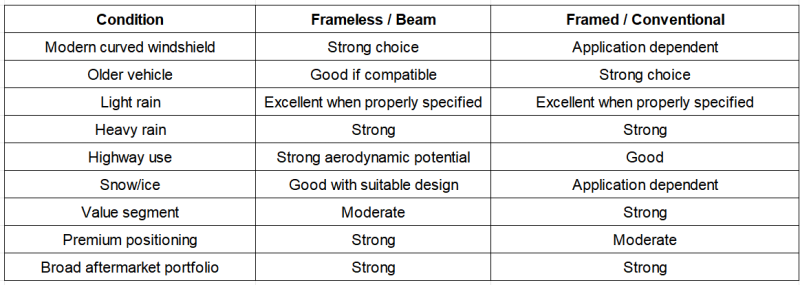
The correct conclusion is not “beam always wins.”
The correct conclusion is:
Product design must match vehicle application and market requirements.

What Type of Wiper Blade Is Best?
For modern vehicles
Beam blades are often a strong choice for newer vehicle applications because their low-profile structure and continuous spring element are well suited to modern windshield designs.
However, vehicle-specific fitment remains essential.
For older vehicles
Conventional blades can remain highly practical for older vehicles designed around traditional wiper-arm and frame systems.
For premium aftermarket brands
Beam and hybrid blades often provide stronger opportunities for premium product positioning because of their appearance, aerodynamic design, and modern construction.
For value-oriented distributors
Conventional blades can offer an efficient way to cover price-sensitive applications.
For broad vehicle coverage
For a distributor serving different vehicle generations, the best strategy may be a combination of technologies rather than a single blade type.
This can create a product portfolio with:
Value → Conventional wiper blade
Mid-range → Beam wiper blade/ Hybrid wiper blade
Premium → Advanced Beam wiper blade / Silicone wiper blade/ Specialty wiper balde
Natural Rubber vs. Silicone Wiper Blades
How YOUNGLOOK Can Support Frameless and Framed Wiper Programs
Multiple product architectures
YOUNGLOOK develops and manufactures different wiper blade structures, including:
- Frameless / beam wipers
- Conventional / framed wipers
- Hybrid wipers
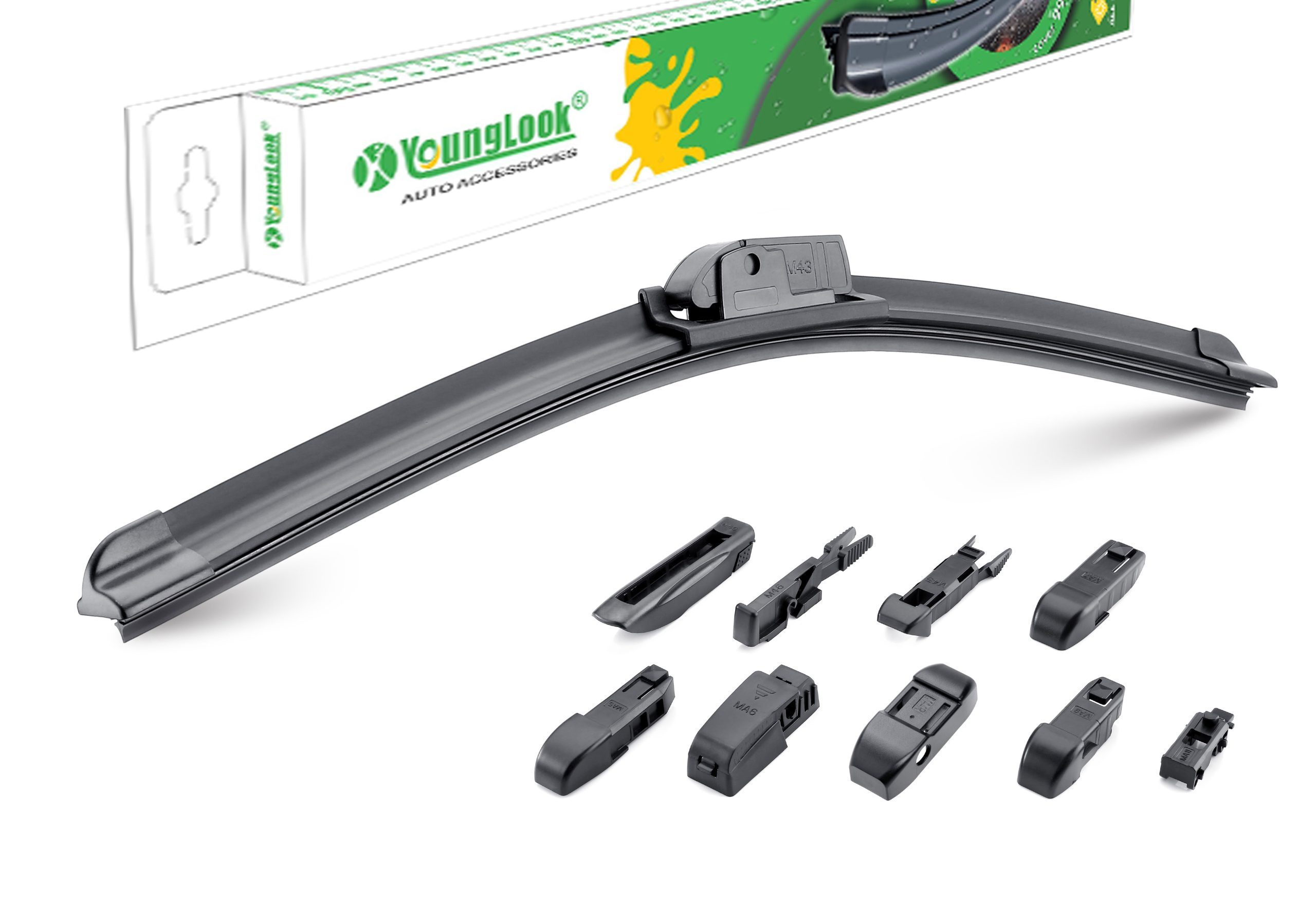
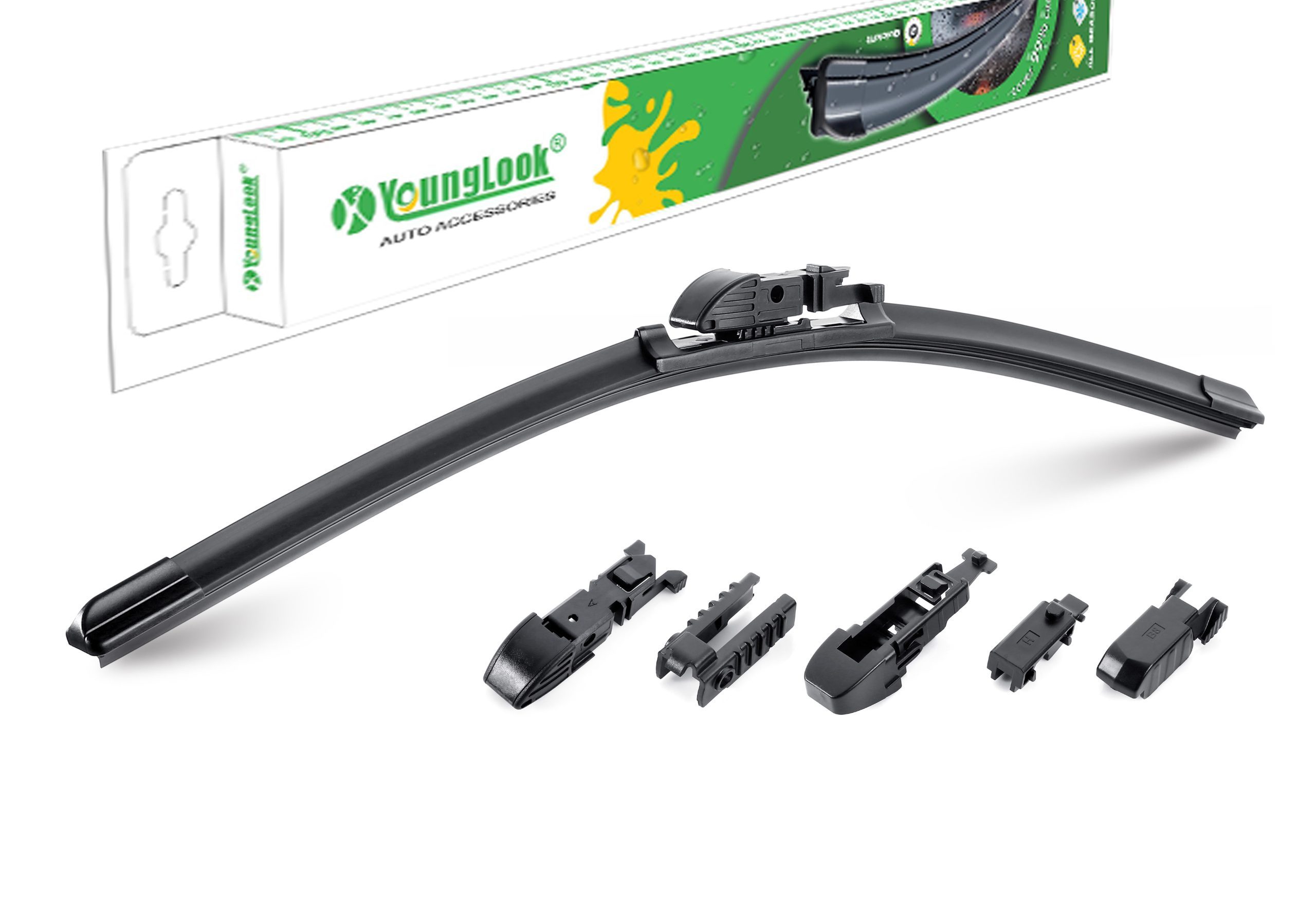
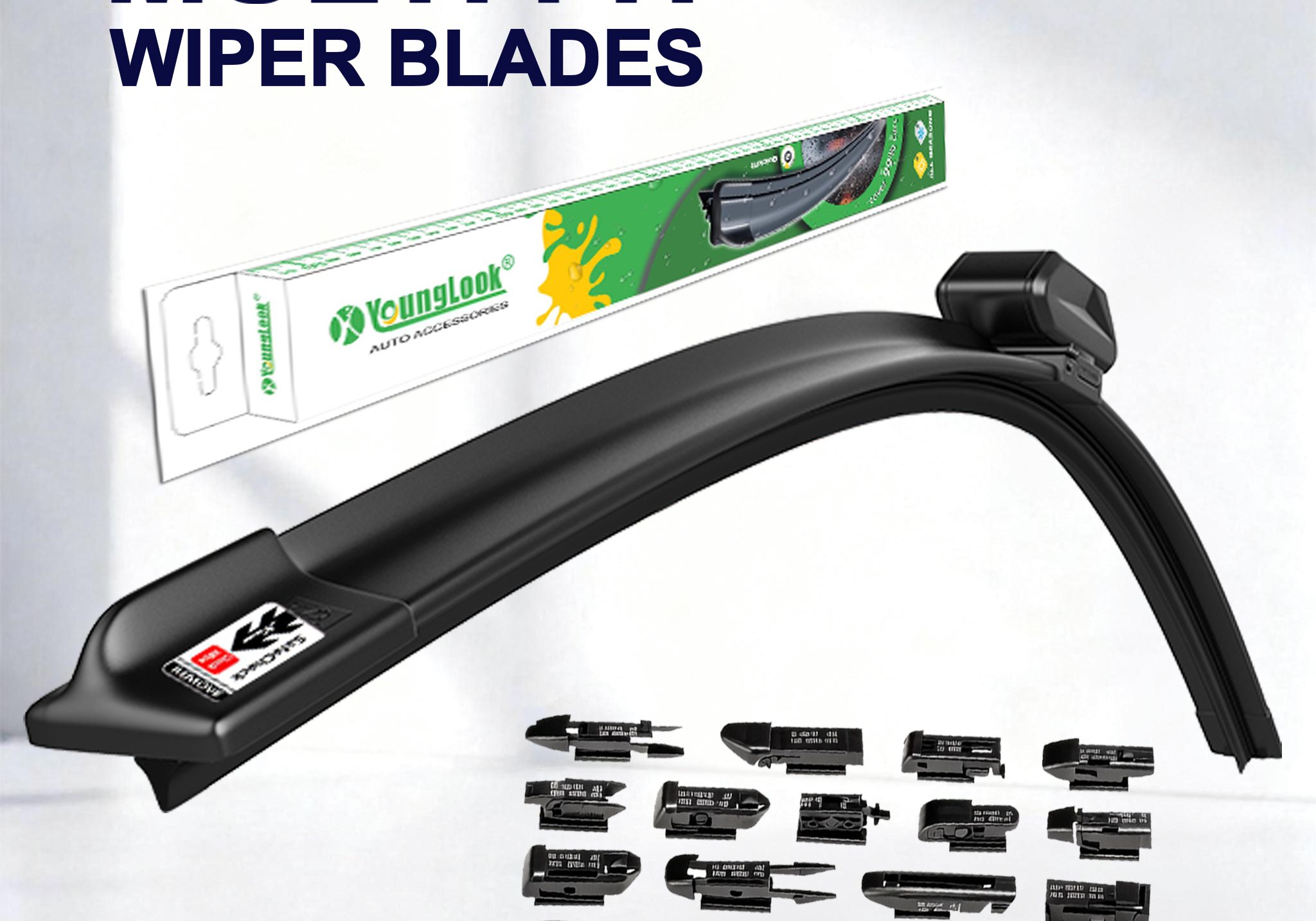
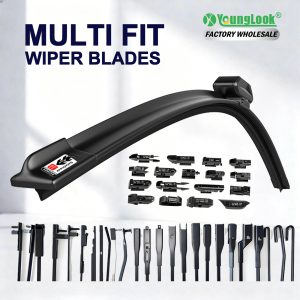
- Multi-fit wipers
- Customized wiper solutions
This allows distributors to build a product portfolio around different vehicle groups and price levels rather than relying on one universal design.
Product development and customization
B2B programs may require more than a standard catalog product.
Depending on the project, customization can involve:
- Blade structure
- Rubber specification
- Spring element
- Adapter
- Spoiler
- Logo
- Packaging
- Label
- Private-label branding
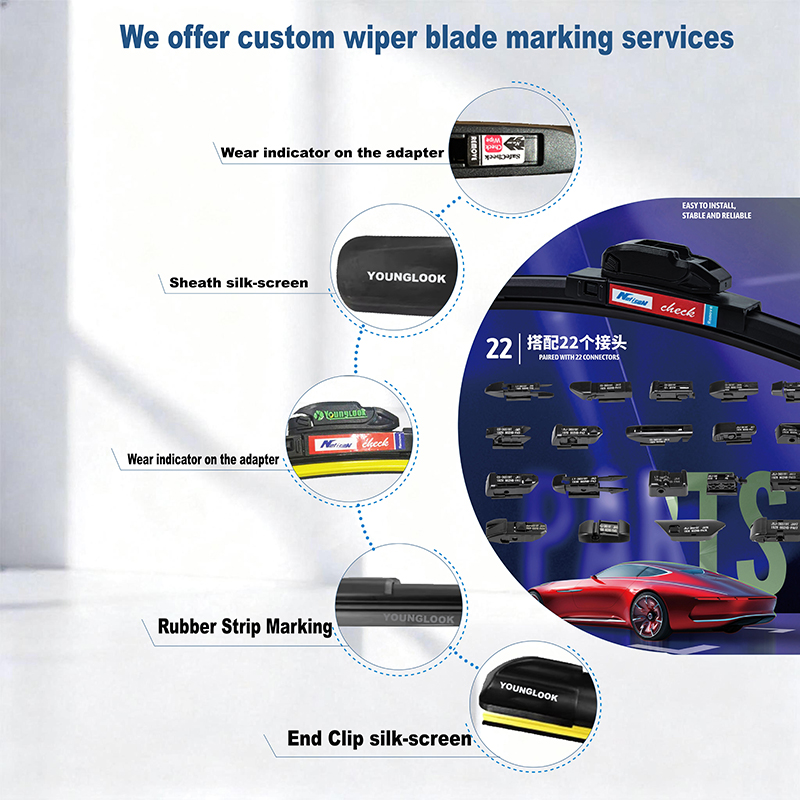
For customers developing a new range, product development should start with the target vehicle application and market requirements.
Quality control from materials to finished products
YOUNGLOOK’s quality approach should be presented as a manufacturing process rather than a marketing statement:
Incoming Materials
↓
Rubber Processing
↓
Component Production
↓
Assembly
↓
Dimensional & Appearance Inspection
↓
Performance Testing
↓
Final Inspection
↓
Packaging & Shipment
This process-based approach helps B2B buyers understand how quality is controlled throughout production.
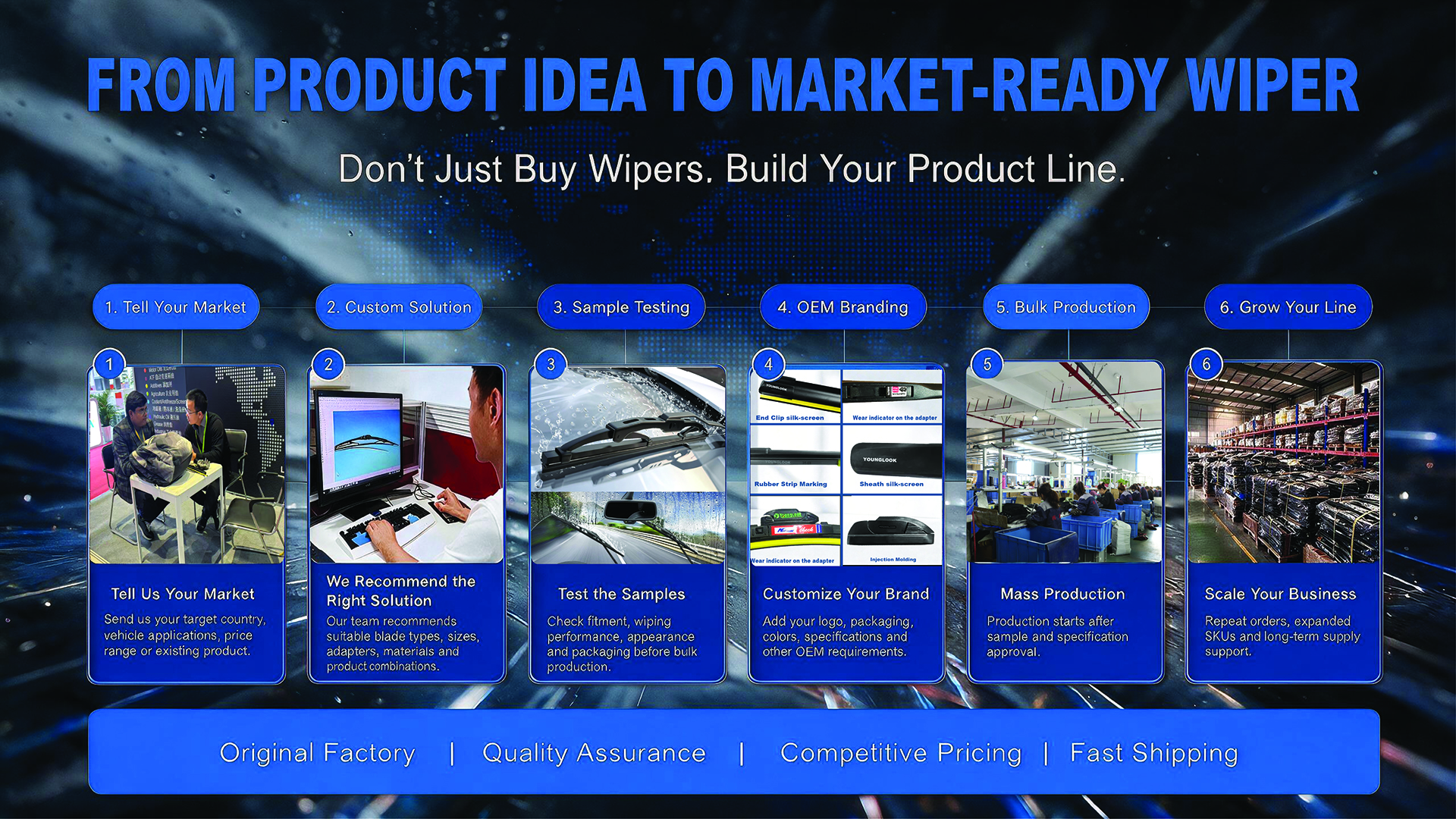

Frameless vs. Framed Wipers: Which One Should a Distributor Buy?
Choose frameless when
Consider beam wipers when the target market emphasizes:
- Newer vehicle applications
- Modern appearance
- Premium positioning
- Curved windshields
- Aerodynamic design
- Private-label upgrades
- Choose framed when
Consider conventional wipers when the market emphasizes:
- Competitive pricing
- Older vehicles
- Traditional applications
- Large value-oriented programs
- Cost-sensitive customers
Choose both for broad market coverage
For a distributor serving a mixed vehicle population, carrying both technologies can provide greater flexibility.
A practical portfolio could look like:
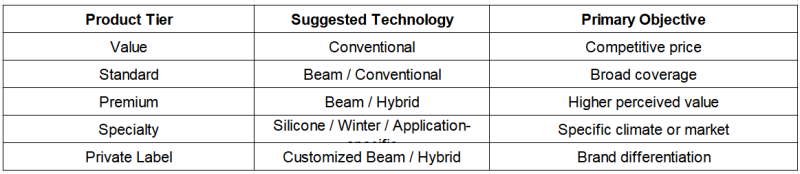
The best portfolio is therefore not necessarily the one with the largest number of SKUs.
It is the one that provides the right vehicle coverage, price architecture, and product differentiation.
Frequently Asked Questions
Are frameless wipers better than framed wipers?
Not universally. Frameless wipers can offer advantages in aerodynamic design, low-profile appearance, and pressure distribution on many modern vehicles. Framed wipers remain a strong option for many traditional and value-oriented applications.
Which is better, beam or conventional wiper blades?
Beam wipers are often well suited to modern vehicles and curved windshields, while conventional wipers remain useful for many older vehicles and cost-sensitive applications. The correct choice depends on vehicle compatibility and product specification.
What is the difference between conventional and flat wiper blades?
Conventional blades normally use an articulated frame with multiple pressure points. Flat or beam blades generally use a continuous flexible spring element and have a lower-profile structure.
What is a frameless wiper blade?
A frameless wiper blade is a beam-style wiper that does not use the traditional articulated metal frame. Instead, its flexible structural element helps maintain pressure against the windshield.
Are frameless wipers suitable for all vehicles?
No. Blade length, curvature, wiper-arm type, adapter, and vehicle application all need to be verified.
What type of wiper blade is best?
is no single best type for every vehicle. Beam blades are often a strong choice for modern applications, while conventional blades remain highly practical for many traditional applications.
Is natural rubber better than silicone?
Not automatically. Both materials can be used in high-quality wiper products. The final performance depends on formulation, processing, surface treatment, blade design, and environmental conditions.
What is a U-hook wiper blade?
A U-hook or hook-style wiper blade uses an adapter designed to connect the blade to a corresponding hook-type wiper arm. The exact adapter must match the arm design.
How long do windshield wipers last?
A common recommendation is approximately 6–12 months, although actual service life varies with climate, usage, UV exposure, temperature, snow, dirt, and other environmental conditions. AAA and Rain-X both provide guidance within this general range.
How are wiper blades manufactured?
A typical process includes raw-material inspection, rubber processing, spring/frame production, injection molding, adapter production, assembly, inspection, testing, and packaging.
What should I ask a wiper blade manufacturer before placing a bulk order?
Ask about vehicle coverage, rubber and spring specifications, adapter compatibility, testing, QC procedures, production capacity, MOQ, lead time, packaging, OEM/ODM capability, and batch consistency.
Can a wiper factory provide private-label products?
Yes. Professional manufacturers can often support customized products, logos, packaging, adapters, rubber specifications, and application-specific development.
About the Author
YOUNGLOOK Wiper Blade Manufacturing Team
YOUNGLOOK is a professional automotive wiper blade manufacturer specializing in the development and production of frameless wiper blade, conventional wiper blade, hybrid wiper blade, multi-fit, and customized wiper blade solutions.
Our product-development approach focuses on the complete wiper system, including rubber wiping elements, spring structures, adapters, blade geometry, assembly, testing, and private-label requirements.
For distributors, importers, wholesalers, and automotive brands, YOUNGLOOK supports projects from sample development and application verification to bulk production and private-label packaging.
Our goal is to help customers build wiper blade programs that combine fitment accuracy, consistent quality, competitive positioning, and scalable supply.
References
SAE International — J903_202410: Ground Vehicle Windshield Wiper Systems. The current SAE J903 revision was published October 28, 2024 and establishes performance standards, test procedures, terminology, and engineering guidance for applicable vehicle wiper systems.
— Windshield Wiping and Washing Systems. The regulation specifies windshield wiping-system requirements, including minimum wiped-area percentages for defined passenger-car windshield areas.
AAA — How to Replace the Windshield Wipers on Your Car. AAA states that most manufacturers recommend replacing wiper blades every 6–12 months, depending on usage and conditions.
AAA — Changing Windshield Wipers Seasonally. Covers environmental factors including heat, dust, UV radiation, snow, and severe weather.
AAA — Understanding Your Vehicle’s Windshields, Wipers & Washers. Explains how windshield shape, spring tension, pressure points, and blade material influence wiping performance.
Bosch Auto Parts — Windshield Wiper Technologies. Describes beam, hybrid, and conventional wiper technologies and their structural differences.
HELLA — Wiper Blade Technology. Provides information on conventional and flat-blade structures, pressure distribution, aerodynamic design, and material considerations.
HELLA — SMARTTECH 2.0. Provides current information on flat-blade design, natural rubber, surface treatment, adapters, and vehicle-market coverage.
Rain-X — Wiper Blade FAQs. Provides replacement-life guidance and vehicle-specific blade selection information.
Rain-X — Vehicle Blade Finder. Provides real vehicle-specific blade-size examples, demonstrating why correct application data is important for aftermarket fitment.
International Automotive Task Force — IATF 16949. Provides information about the automotive quality-management framework and its role in automotive supply-chain quality systems.
Contact YOUNGLOOK for Your Wiper Blade Program

Looking for a reliable supplier for frameless beam wipers, framed conventional wipers, hybrid blades, multi-fit wipers, or private-label products?
YOUNGLOOK can support B2B customers with product selection, sample development, application verification, OEM/ODM customization, adapter solutions, packaging, and bulk production.
Contact us today to discuss your target vehicle applications, request samples, review product specifications, or develop your own private-label wiper blade program.
Tell us your target market, vehicle coverage, blade sizes, estimated order quantity, and packaging requirements—and our team can recommend the most suitable wiper blade solution for your business.