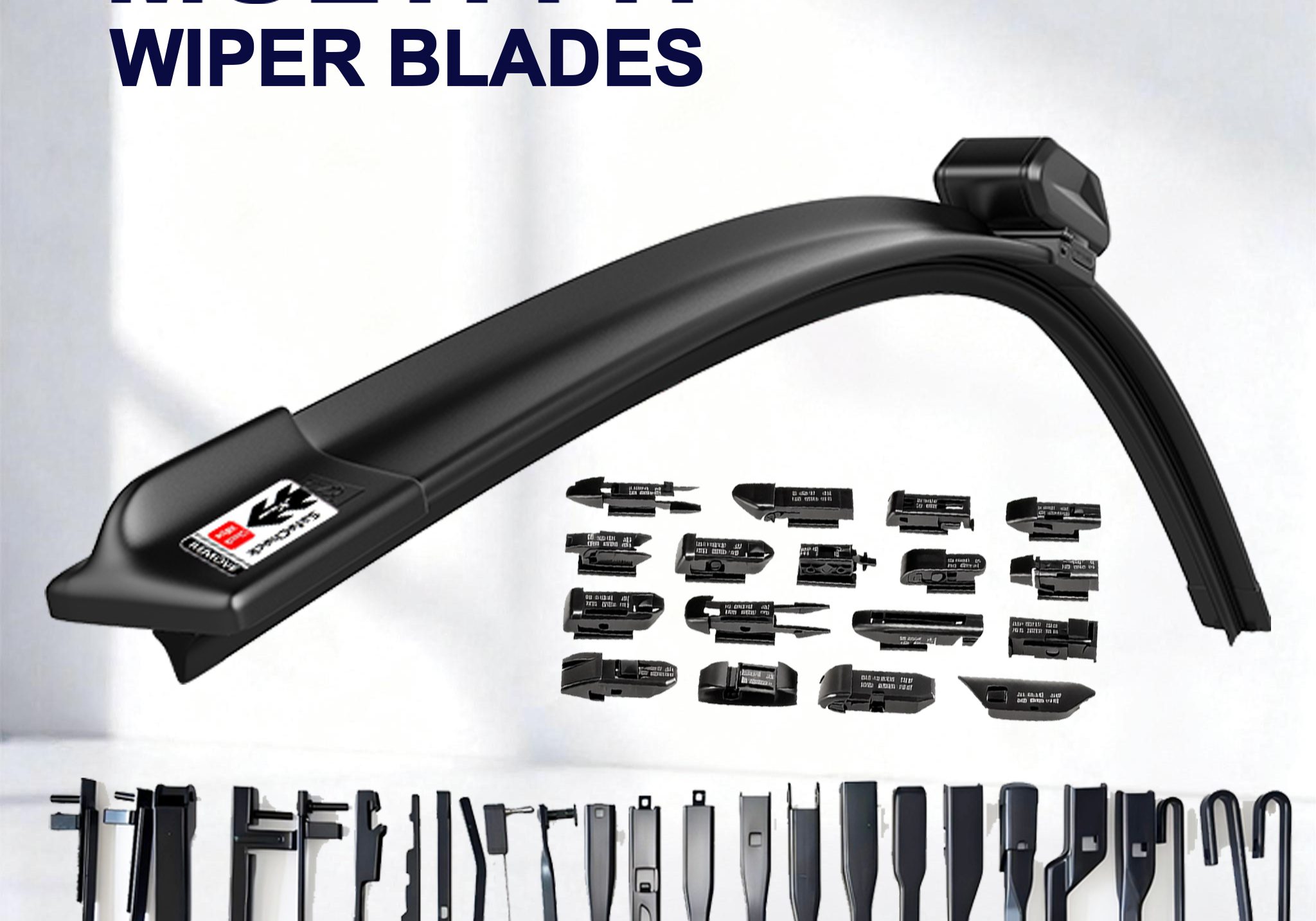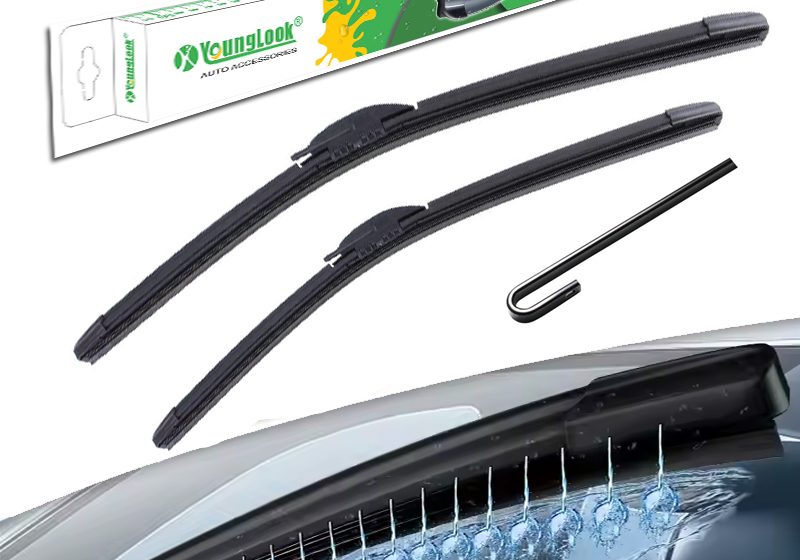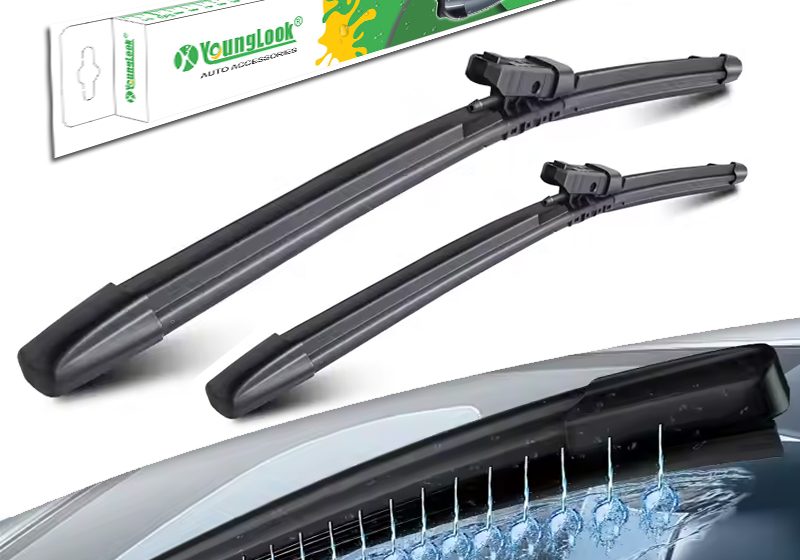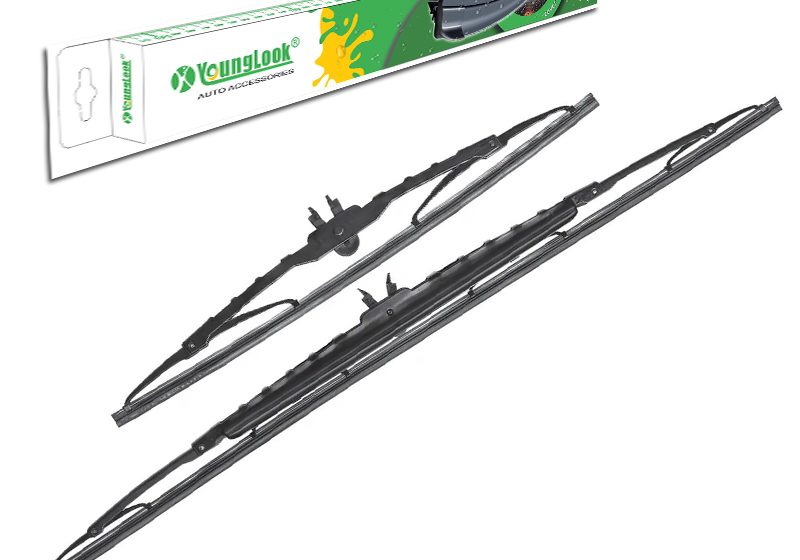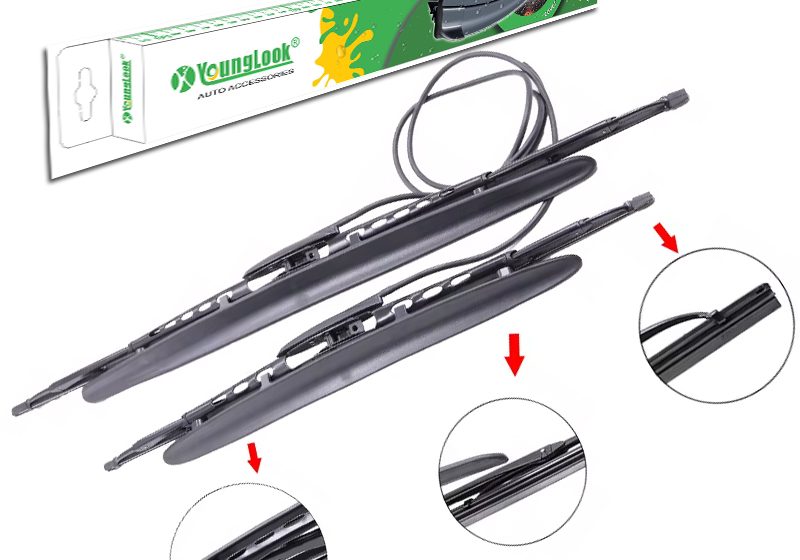
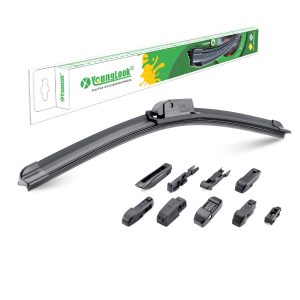
When you look at a windshield wiper blade, the product may appear simple: a rubber wiping edge, a flexible structure, and a connector that attaches to the vehicle’s wiper arm.
In reality, a reliable wiper blade is the result of carefully selected materials, accurate component manufacturing, controlled assembly, and repeated performance testing.
For distributors, wholesalers, automotive aftermarket brands, and private-label buyers, understanding the wiper blade manufacturing process is important because product quality is not determined by the appearance of one sample. It depends on material consistency, manufacturing accuracy, assembly quality, and batch-to-batch control.
So, how are windshield wiper blades made?
This guide explains the complete wiper blade production process, from raw materials and rubber processing to assembly, testing, quality control, and OEM/ODM production.
What Are Windshield Wiper Blades Made Of?
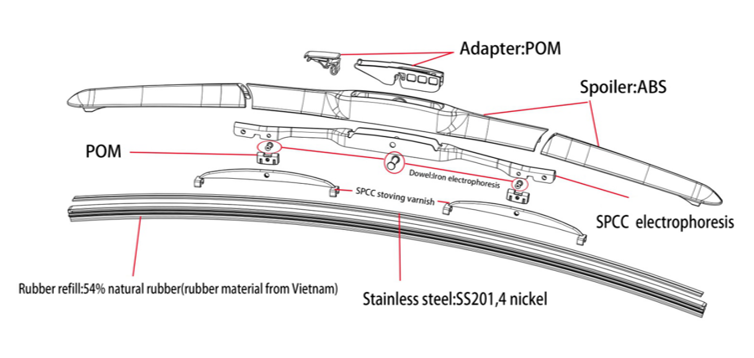
A modern windshield wiper blade consists of several components that work together to maintain contact with the windshield and remove rain, snow, dust, and other contaminants.
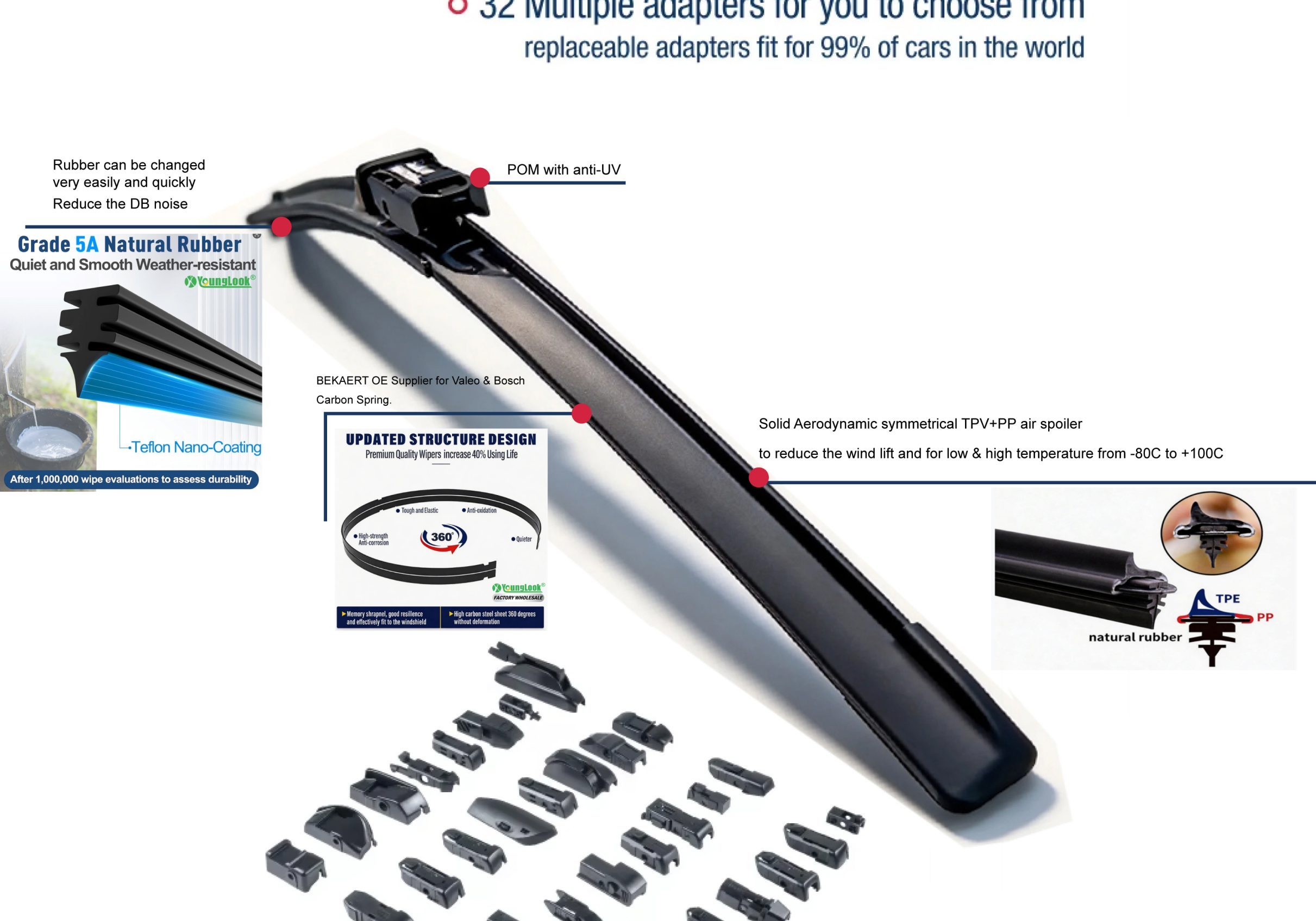
Wiper Blade Rubber
The wiper blade rubber is the part that directly contacts the windshield. Its formulation, hardness, elasticity, surface treatment, and wiping-edge geometry have a direct effect on wiping performance.
Common materials include natural rubber, synthetic rubber compounds, rubber blends, and silicone wiper blade materials.
For aftermarket applications, material selection normally depends on the target market, price positioning, expected service conditions, and required durability.
Spring Steel
The flexible steel elements inside a beam wiper blade or conventional blade help distribute pressure along the windshield.
The material and dimensional accuracy of the spring steel influence flexibility, pressure distribution, and the blade’s ability to follow the windshield curvature.
Spoiler and Aerodynamic Components
Many beam wiper blades and hybrid wiper blades use an aerodynamic spoiler or integrated air deflector.
Its purpose is to help maintain stable contact between the blade and windshield as vehicle speed increases.
Wiper Blade Adapter and Connector
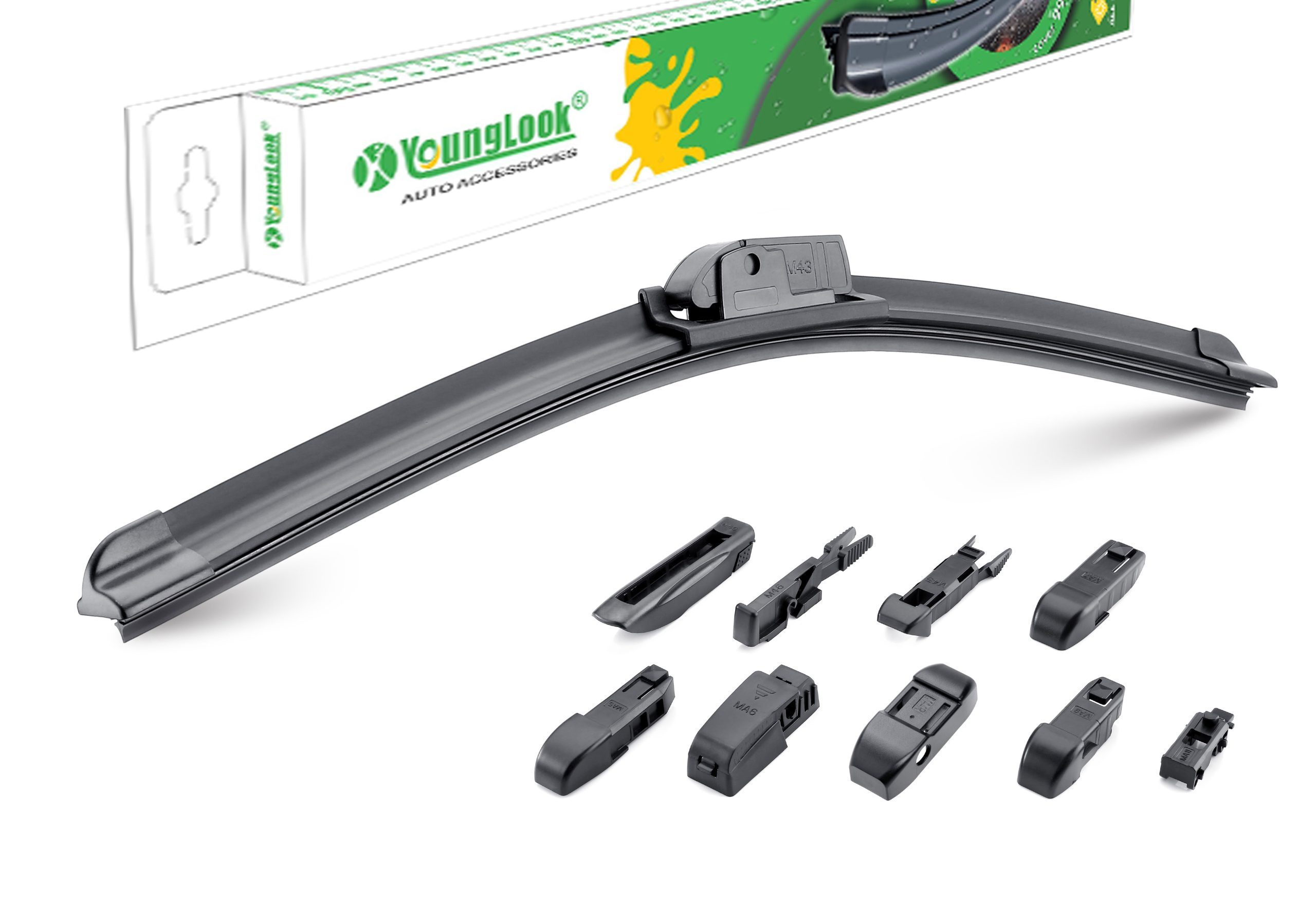
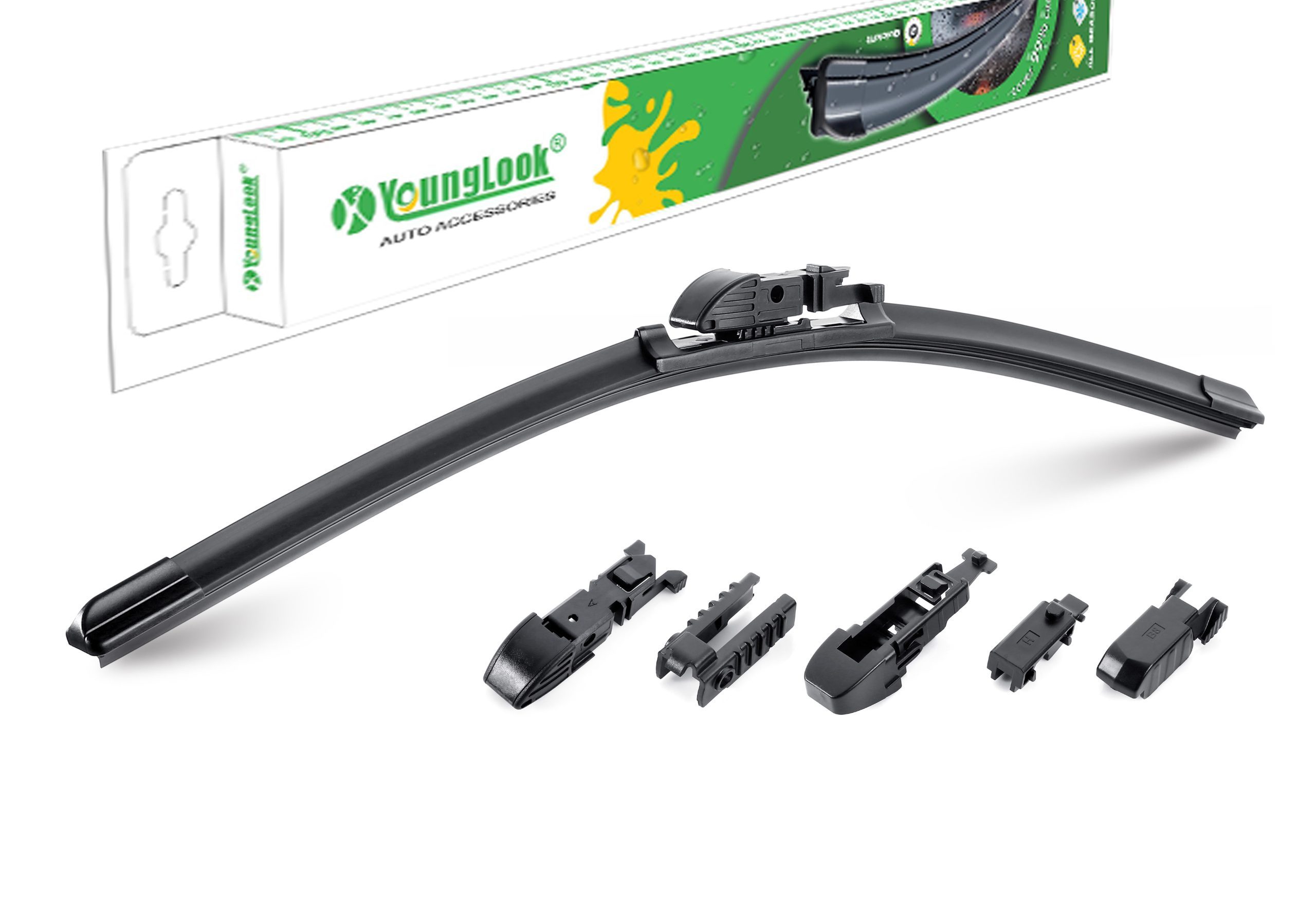
The wiper blade adapter connects the blade to the vehicle’s wiper arm.
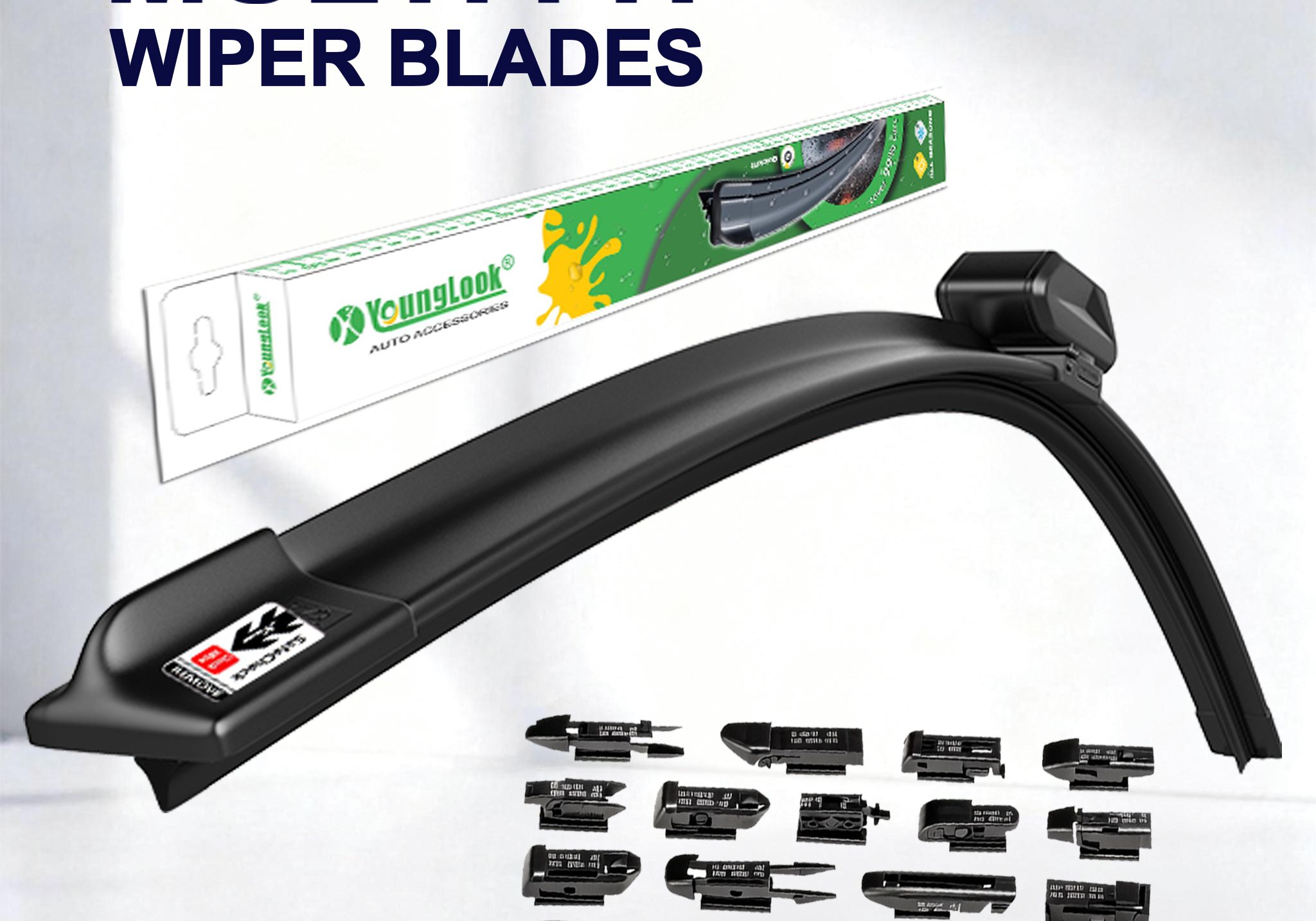
Common aftermarket connection systems include U-hook, J-hook, push-button, side-pin, bayonet, top-lock, and other vehicle-specific configurations.
A correct connector is essential because even a high-quality blade cannot perform properly if the connection is incompatible or incorrectly installed.
End Caps and Plastic Components
Depending on the design, wiper blades may also contain end caps, locks, clips, positioning components, and other injection-molded parts.
These components help hold the blade structure together and maintain consistent assembly quality.
How Does Each Component Affect Wiper Blade Performance?
A good car wiper blade is not simply a piece of rubber attached to metal. Each component contributes to the final performance.
Rubber Determines Wiping Performance
The rubber squeegee is responsible for removing water from the windshield.
Important characteristics include elasticity, hardness, wiping-edge geometry, surface friction, weather resistance, and resistance to ozone and temperature changes.
A well-designed natural rubber wiper blade can provide a good balance between wiping performance, flexibility, durability, and cost.
Spring Steel Controls Pressure Distribution
The flexible spring element helps distribute pressure across the blade.
If pressure is uneven, some areas of the blade may lose contact with the windshield, potentially causing streaks, missed areas, or chatter.
This is particularly important for longer beam wiper blades, where the structure must follow the windshield curvature consistently.
Spoiler Improves High-Speed Stability
Aerodynamic design becomes increasingly important as vehicle speed increases.
A properly designed spoiler can help manage airflow over the blade and maintain contact with the glass.
This is one reason why modern frameless wiper blades often use an integrated aerodynamic profile.
Connectors Determine Vehicle Compatibility
The wiper blade connector must match the vehicle’s wiper arm.
For B2B buyers, connector compatibility is particularly important because distributors may need to cover hundreds or thousands of vehicle applications.
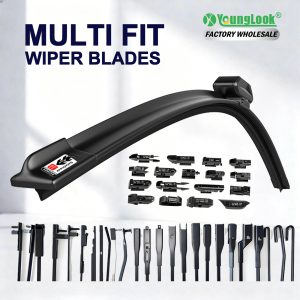
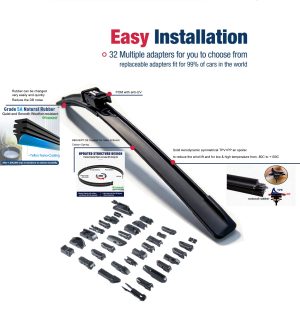
A multi-adapter wiper blade can therefore provide broader aftermarket coverage when the adapter system is properly designed and tested.
How Are Windshield Wiper Blades Manufactured?
The general wiper blade manufacturing process can be divided into several stages:
Raw Materials → Material Inspection → Rubber Processing → Spring Steel Processing → Plastic & Adapter Production → Component Assembly → Rubber Installation → Final Assembly → Performance Testing → Final Quality Control → Packaging → Shipment
The exact process varies according to the blade construction, material specification, tooling, and customer requirements.
Step 1: Raw Material Inspection
Before production begins, incoming materials should be checked against the required specifications.
For a wiper blade manufacturer, this can include:
Rubber compound
Spring steel
Stainless steel components
Plastic materials
Adapters
Spoilers
End caps
Packaging materials
Material inspection is important because inconsistent raw materials can create problems later in the production process.
For example, differences in rubber properties may affect wiping performance, while variations in spring steel dimensions can affect pressure distribution and blade conformity.
Step 2: Wiper Rubber Processing
The rubber manufacturing process normally involves several controlled stages.
Rubber Compounding and Mixing
Raw rubber and other formulation components are mixed according to the required material specification.
The formulation can influence hardness, elasticity, wear resistance, ozone resistance, temperature performance, and friction characteristics.
For buyers comparing natural rubber vs silicone wiper blades, material formulation is one of the most important technical factors.
Rubber Extrusion
The prepared rubber compound is processed through an extrusion system to form the required wiper profile.
The geometry of the wiping edge must remain consistent throughout the production batch.
Vulcanization
The rubber profile is then vulcanized to achieve the required physical properties.
Temperature, time, and process control are important because under- or over-processing can affect the final rubber performance.
Cutting and Surface Treatment
After processing, the rubber is cut to the required length.
Depending on the product specification, additional surface treatments or friction-reducing coatings may be applied.
The final wiping edge is then inspected for dimensional accuracy and surface quality.
Step 3: Spring Steel Processing
The next stage is the manufacturing of the flexible steel elements.
Steel Strip Cutting
Spring steel is cut according to the required blade length and design.
Forming and Processing
The steel elements are formed to match the intended blade structure.
Dimensional consistency is important because the steel needs to work together with the rubber and other components.
Surface and Corrosion Protection
Depending on the specification, steel components may receive appropriate surface treatment or corrosion protection.
This is particularly relevant for wiper blades for harsh weather, coastal environments, and markets where corrosion resistance is an important purchasing requirement.
Step 4: Wiper Adapter and Plastic Component Production
The wiper blade adapter is produced according to the required vehicle application.
Depending on the project, manufacturers may use injection molding, machining, or other component-production processes.
U-Hook and J-Hook Connections
The U-hook wiper blade remains an important aftermarket configuration because many vehicles use hook-style wiper arms.
For these products, the connector must securely hold the blade while allowing correct installation and movement.
Multi-Adapter Systems
For distributors serving multiple vehicle applications, multi-adapter wiper blades can reduce the number of individual SKUs required.
However, each adapter still needs to be checked for fitment and secure attachment.
Step 5: Wiper Blade Assembly
After individual components are prepared, the wiper blade assembly process begins.
A typical assembly sequence may include:
Preparing the rubber element
Installing flexible steel elements
Installing the main frame or beam structure
Installing the adapter
Adding spoiler components
Installing end caps or locking components
Checking the overall dimensions
Inspecting the finished appearance
Different blade constructions require different assembly methods.
A conventional wiper blade uses a frame and multiple pressure points, while a beam wiper blade uses a flexible beam structure designed to distribute pressure along the blade.
Hybrid blades combine characteristics of conventional and beam constructions. Industry explanations commonly distinguish these three constructions based on their structure and pressure distribution.
How Are Wiper Blades Tested?
Manufacturing a wiper blade is only part of the process. Testing is necessary to verify whether the finished product meets the required specification.
Initial Wiping Performance Test
The first objective is to determine whether the blade can effectively remove water from the windshield.
Typical observations can include:
Streaking
Skipping
Chattering
Unwiped areas
Wiping consistency
Noise
The actual test method should be defined according to the customer’s specification and applicable testing requirements.
Durability Testing
A wiper blade durability test evaluates how the product performs after repeated wiping cycles.
For B2B buyers, durability testing can help identify whether the rubber edge, steel structure, connector, and other components maintain their function after extended use.
Depending on the project, manufacturers may perform hundreds of thousands or more wiping cycles.
If a specific cycle-life figure is published, it should always be supported by the manufacturer’s actual test method and report.
Ozone Resistance Testing
Ozone exposure can contribute to rubber aging, cracking, and deterioration.
Therefore, ozone resistance testing can be relevant when evaluating wiper rubber durability, especially for aftermarket products intended for demanding climates.
Temperature Resistance Testing
A car wiper blade may be exposed to very different environmental conditions during its service life.
Depending on the target market, testing may include high-temperature and low-temperature conditions to evaluate whether the rubber and other components maintain their required properties.
Fitment and Installation Testing
A wiper blade should not only wipe well; it must also fit the intended vehicle.
Testing can include:
Wiper arm compatibility
Adapter installation
Locking security
Blade length
Vehicle-specific fitment
Removal and installation
Post-installation stability
For aftermarket buyers, wiper blade fitment is particularly important because a small connector problem can lead to customer complaints even when the rubber itself performs well.
On-Vehicle Testing
Laboratory testing provides controlled data, while on-vehicle testing helps evaluate the complete product under actual installation conditions.
Vehicle testing can be used to assess wiping performance, noise, fitment, pressure distribution, and overall installation.
Why Manufacturing Consistency Matters to Wiper Blade Buyers
For a distributor or private-label brand, one good sample does not guarantee a successful bulk order.
The key question is:
Can the manufacturer reproduce the same quality across thousands or hundreds of thousands of pieces?
Rubber Consistency
The rubber compound and wiping-edge profile should remain consistent from batch to batch.
Differences in hardness, elasticity, surface treatment, or edge geometry may affect wiping performance.
Steel and Structural Consistency
The spring steel must maintain consistent dimensions and forming accuracy.
This helps the finished blade maintain the intended pressure distribution and windshield contact.
Adapter Consistency
For multi-fit wiper blades, adapter dimensions and locking mechanisms need consistent production control.
An adapter that fits correctly on the first sample but becomes loose or difficult to install in bulk production can create serious aftermarket problems.
Assembly Consistency
The rubber, steel, spoiler, connector, and end components must be assembled according to controlled procedures.
For a professional wiper blade factory, production consistency is therefore as important as the design itself.
What Should You Look for in a Wiper Blade Manufacturer?
Choosing a wiper blade supplier is not only about comparing unit prices.
For distributors, importers, buying groups, and private-label brands, several factors should be evaluated before placing a bulk order.
Manufacturing Experience
Look for a manufacturer with actual experience in windshield wiper blade manufacturing, rather than a trading company that outsources the complete production process.
A real factory should be able to explain its materials, production process, testing procedures, and quality controls.
In-House R&D and Tooling
An experienced wiper blade manufacturer should be able to support product development, tooling, connector customization, and application-specific requirements.
This becomes particularly important for OEM and ODM projects.
Quality Control System
Ask how the supplier controls quality from incoming materials to finished products.
A practical QC process can include:
Incoming Material Inspection → Semi-Finished Product Testing → Production-Line Sampling → Final Product Testing
This gives buyers a clearer picture of how the manufacturer controls quality rather than relying only on a final visual inspection.
Testing Capability
Ask what tests are available for the product you are purchasing.
Depending on the project, this may include:
Wiping performance
Durability
Ozone resistance
Temperature resistance
Corrosion resistance
Fitment
Assembly and disassembly
On-vehicle testing
The important point is to match the test program with the actual product requirements instead of simply listing tests without evidence.
OEM, ODM and Private Label Support
For brands and distributors, a capable OEM wiper blade manufacturer should be able to support more than the blade itself.
Services may include:
Product development
Logo branding
Customized packaging
Private label production
Adapter development
Sample development
Product modifications
Vehicle-specific applications
How Younglook Supports Wiper Blade Manufacturing Projects
At YOUNGLOOK, our focus is not simply producing a generic car wiper blade.
We work with distributors, automotive aftermarket companies, importers, and private-label brands on product selection, development, manufacturing, testing, and packaging.
Product Development and R&D
Our production and R&D capabilities support different wiper blade types, including beam wiper blades, hybrid wiper blades, conventional blades, rear blades, and multi-adapter products.
Material Selection
Different markets require different product positioning.
Depending on the application, we can work with natural rubber wiper blades, upgraded rubber compounds, and other material solutions.
Material selection should be based on performance requirements, target market, climate, price positioning, and expected service conditions.
Quality Control
Our QC process covers the product from incoming materials through production and final inspection.
This helps control key factors such as rubber quality, component dimensions, assembly, fitment, and finished-product consistency.
OEM and Private Label Production
For customers building their own wiper blade brand, we can support customized products, branding, packaging, and OEM/ODM development.
This allows buyers to develop a product range according to their target market instead of simply selecting an existing generic product.
How to Choose the Right Wiper Blade for Your Market
The best windshield wiper blade is not necessarily the most expensive one.
The right product depends on the vehicle population, climate, customer expectations, product positioning, and distribution channel.
For Value-Oriented Aftermarket Programs
A well-designed conventional or standard natural rubber wiper blade can be suitable when cost competitiveness and broad vehicle coverage are priorities.
For Premium Aftermarket Programs
Beam wiper blades and frameless wiper blades can provide a more modern product design and may be positioned toward premium aftermarket customers.
For Multi-Vehicle Distribution
A multi-adapter wiper blade can simplify inventory when one blade design covers multiple arm configurations.
For OEM and Private Label Projects
Buyers should evaluate not only the sample price but also:
MOQ
Mixed-size options
Material specification
Packaging
Adapter coverage
Testing
Lead time
Production capacity
Quality consistency
Warranty and after-sales support
Frequently Asked Questions About Wiper Blade Manufacturing
How long does it take to manufacture wiper blades?
The production lead time depends on the product design, order quantity, packaging requirements, material availability, and whether new tooling is required.
Standard products can normally be handled more quickly than new OEM/ODM projects.
What materials are used in windshield wiper blades?
Common materials include natural rubber, synthetic rubber compounds, silicone, spring steel, stainless steel, engineering plastics, and various adapter materials.
The final material combination depends on the blade design and target performance.
How are wiper blades tested?
Testing can include wiping performance, durability, ozone resistance, temperature resistance, corrosion resistance, fitment, assembly, and on-vehicle testing.
The exact test program should be matched to the product specification and target market.
What is the difference between beam and conventional wiper blades?
A conventional wiper blade generally uses a metal frame with defined pressure points, while a beam wiper blade uses a flexible beam structure designed to distribute pressure along the blade.
Hybrid wipers combine features from both constructions.
Can a wiper blade manufacturer develop products from a sample?
Yes. Depending on the manufacturer, an existing sample can be used as a starting point for product analysis, measurement, tooling, material selection, and OEM/ODM development.
However, the exact development process depends on the customer’s technical requirements and the manufacturer’s engineering capabilities.
Can I order mixed sizes from a wiper blade factory?
Many aftermarket manufacturers can support mixed sizes within an order, although the available MOQ and production conditions depend on the supplier and product range.
For distributors, confirming mixed-size MOQ before ordering can help reduce inventory risk.
What should I ask a wiper blade supplier before placing an order?
Ask about the material specification, product range, MOQ, mixed-size policy, testing, fitment coverage, packaging, lead time, OEM/ODM capability, production capacity, and quality-control process.
A supplier should be able to provide clear answers and supporting evidence where applicable.
Explore Our Frameless U-Hook Wiper Blade
If you are looking for a frameless wiper blade supplier for the automotive aftermarket, YOUNGLOOK offers soft frameless U-Hook wiper blades in a wide range of sizes.
Our product solutions can be developed for distributors, wholesalers, private-label brands, and automotive aftermarket customers.
Need a quotation or sample?
Send us your required:
Wiper blade type
Sizes
Vehicle applications
Connector requirements
Estimated order quantity
Packaging requirements
Target market
Our team can recommend a suitable wiper blade solution based on your application and purchasing requirements.
Talk to YOUNGLOOK about your next wiper blade project.